


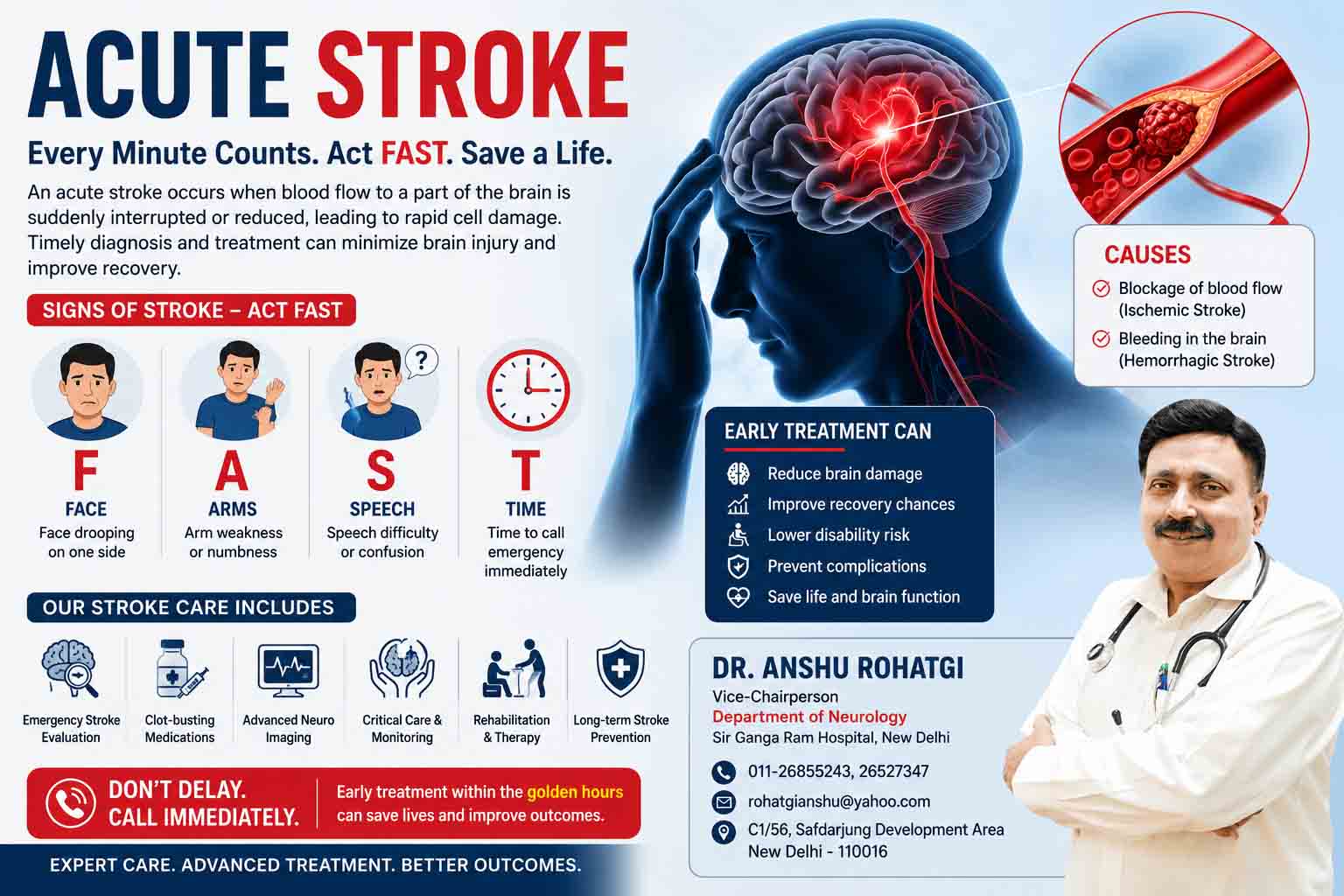
Acute Stroke Treatment in Delhi – Advanced Stroke Care by Dr. Anshu Rohatgi
An acute stroke occurs when the blood supply to a part of the brain is suddenly interrupted or reduced, causing brain cells to lose oxygen and nutrients. This medical emergency requires immediate diagnosis and treatment to prevent permanent brain damage, disability, or life-threatening complications.
Timely medical intervention can significantly improve recovery outcomes and reduce the risk of long-term neurological problems.
Types of Stroke
Ischemic Stroke
This is the most common type of stroke and occurs when a blood clot blocks an artery supplying blood to the brain.
Hemorrhagic Stroke
This occurs when a blood vessel in the brain ruptures, causing bleeding inside or around the brain.
Transient Ischemic Attack (TIA)
Often called a “mini-stroke,” a TIA causes temporary stroke-like symptoms and serves as an important warning sign for a future stroke.
Common Symptoms of Acute Stroke
Seek immediate medical attention if you experience:
- Sudden weakness or numbness in the face, arm, or leg
- Difficulty speaking or understanding speech
- Sudden confusion
- Loss of balance or coordination
- Sudden severe headache
- Blurred or loss of vision
- Dizziness or difficulty walking
- Facial drooping
Early recognition of symptoms can save lives and improve recovery.
Causes & Risk Factors
Several medical conditions and lifestyle factors increase the risk of stroke, including:
- High blood pressure
- Diabetes
- High cholesterol
- Heart disease
- Smoking
- Obesity
- Stress
- Lack of physical activity
- Family history of stroke
- Excessive alcohol consumption
Diagnosis of Acute Stroke
Accurate and rapid diagnosis is essential for effective stroke treatment. Evaluation may include:
- Neurological examination
- CT Scan
- MRI Brain
- Blood tests
- Carotid Doppler
- ECG & Echocardiography
These investigations help determine the type, location, and severity of the stroke.
Acute Stroke Treatment
Treatment depends on the type and severity of stroke. Early treatment helps restore blood flow and minimize brain damage.
Stroke Management May Include:
- Emergency stroke evaluation
- Clot-busting medications
- Blood thinner medications
- Neurocritical care
- Rehabilitation therapy
- Physiotherapy & speech therapy
- Long-term stroke prevention
Why Early Stroke Treatment is Important
The first few hours after stroke symptoms begin are critical. Immediate treatment can:
- Reduce brain damage
- Improve recovery chances
- Lower disability risk
- Prevent complications
- Save life and brain function
Expert Stroke Care by Dr. Anshu Rohatgi
Dr. Anshu Rohatgi is a highly experienced neurologist in Delhi specializing in acute stroke management and neurological emergencies. With decades of expertise in treating complex neurological disorders, he provides evidence-based and patient-focused stroke care.
His advanced clinical approach helps patients receive timely diagnosis, emergency intervention, and comprehensive rehabilitation support for better recovery outcomes.