


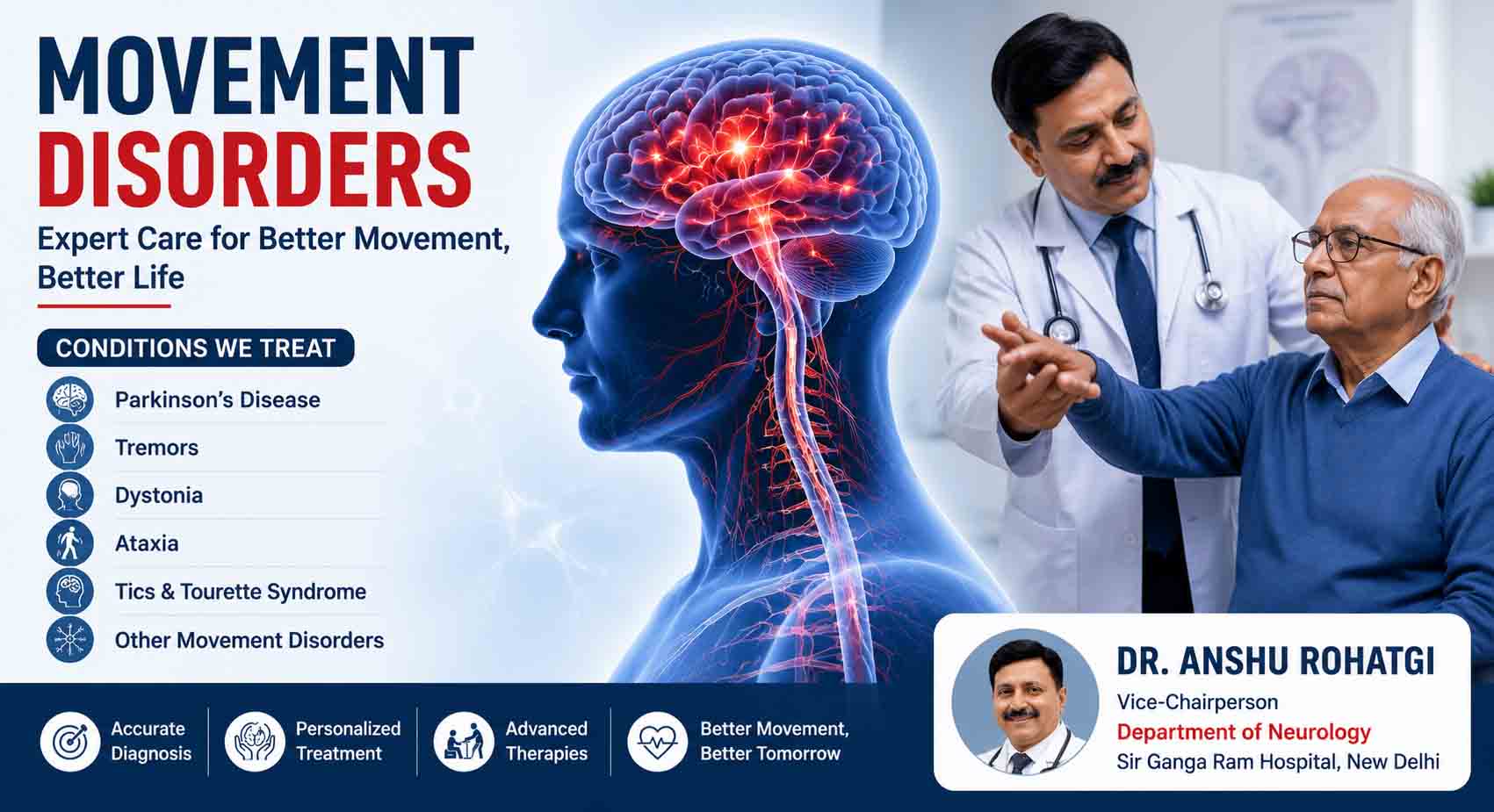
Movement Disorders Treatment in Delhi – Expert Neurological Care
Movement disorders are a group of neurological conditions that affect the ability to produce and control voluntary body movements. These disorders may cause abnormal movements, slowed movements, tremors, stiffness, muscle spasms, or difficulty with coordination and balance.
Movement disorders can significantly impact daily life, mobility, speech, and overall quality of life if left untreated. Early diagnosis and proper neurological care are essential for effective symptom management and improved functioning.
Common Types of Movement Disorders
There are several types of movement disorders, including:
Parkinson’s Disease
A progressive neurological condition causing tremors, stiffness, slowed movement, and balance problems.
Essential Tremor
A disorder that causes involuntary shaking, usually affecting the hands, head, or voice.
Dystonia
A condition involving involuntary muscle contractions leading to abnormal postures and repetitive movements.
Chorea
Rapid, involuntary movements that can affect different parts of the body.
Ataxia
A neurological disorder that affects balance, coordination, and speech.
Tics & Tourette Syndrome
Conditions involving sudden repetitive movements or vocal sounds.
Symptoms of Movement Disorders
Symptoms may vary depending on the underlying neurological condition.
Common Symptoms Include:
- Tremors or shaking
- Muscle stiffness
- Slowed body movements
- Difficulty walking
- Loss of balance or coordination
- Involuntary movements
- Muscle spasms
- Changes in handwriting
- Speech difficulties
- Uncontrolled jerking movements
If these symptoms interfere with daily activities, medical evaluation by a neurologist is important.
Causes of Movement Disorders
Movement disorders may develop due to:
- Neurological degeneration
- Genetic conditions
- Brain injury or stroke
- Infections affecting the nervous system
- Medication side effects
- Metabolic disorders
- Autoimmune diseases
Accurate diagnosis is essential to identify the underlying cause and plan appropriate treatment.
Diagnosis of Movement Disorders
A detailed neurological assessment helps determine the type and severity of the disorder.
Diagnostic Evaluation May Include:
- Neurological examination
- Medical history evaluation
- MRI Brain
- CT Scan
- Blood tests
- Electrophysiological studies
- Movement assessment
Advanced neurological evaluation helps create an effective personalized treatment plan.
Movement Disorders Treatment
Treatment depends on the specific condition, symptoms, and severity. The goal is to improve movement control, reduce symptoms, and enhance quality of life.
Treatment Options May Include:
- Medications for tremors and stiffness
- Parkinson’s disease management
- Botulinum toxin injections
- Physiotherapy
- Occupational therapy
- Speech therapy
- Lifestyle modifications
- Rehabilitation programs
Comprehensive treatment and regular follow-up help patients manage symptoms more effectively.
Why Early Treatment is Important
Early diagnosis and treatment can:
- Improve movement control
- Slow disease progression
- Reduce complications
- Improve independence
- Enhance daily functioning
- Improve quality of life
Timely neurological care plays a crucial role in long-term symptom management.
Expert Movement Disorder Care by Dr. Anshu Rohatgi
Dr. Anshu Rohatgi is a highly experienced neurologist in Delhi specializing in movement disorders and advanced neurological care. With decades of expertise in diagnosing and managing Parkinson’s disease, tremors, dystonia, and other movement-related neurological conditions, he provides personalized and evidence-based treatment.
His patient-focused approach ensures comprehensive evaluation and long-term care for improved patient outcomes.
Why Choose Dr. Anshu Rohatgi?
- Experienced neurologist in Delhi
- Expertise in movement disorders
- Advanced neurological diagnosis
- Personalized treatment plans
- Comprehensive rehabilitation support
- Associated with Sir Ganga Ram Hospital, New Delhi
Book Consultation
If you are experiencing tremors, stiffness, balance problems, or abnormal body movements, consult an experienced neurologist for proper evaluation and treatment.