


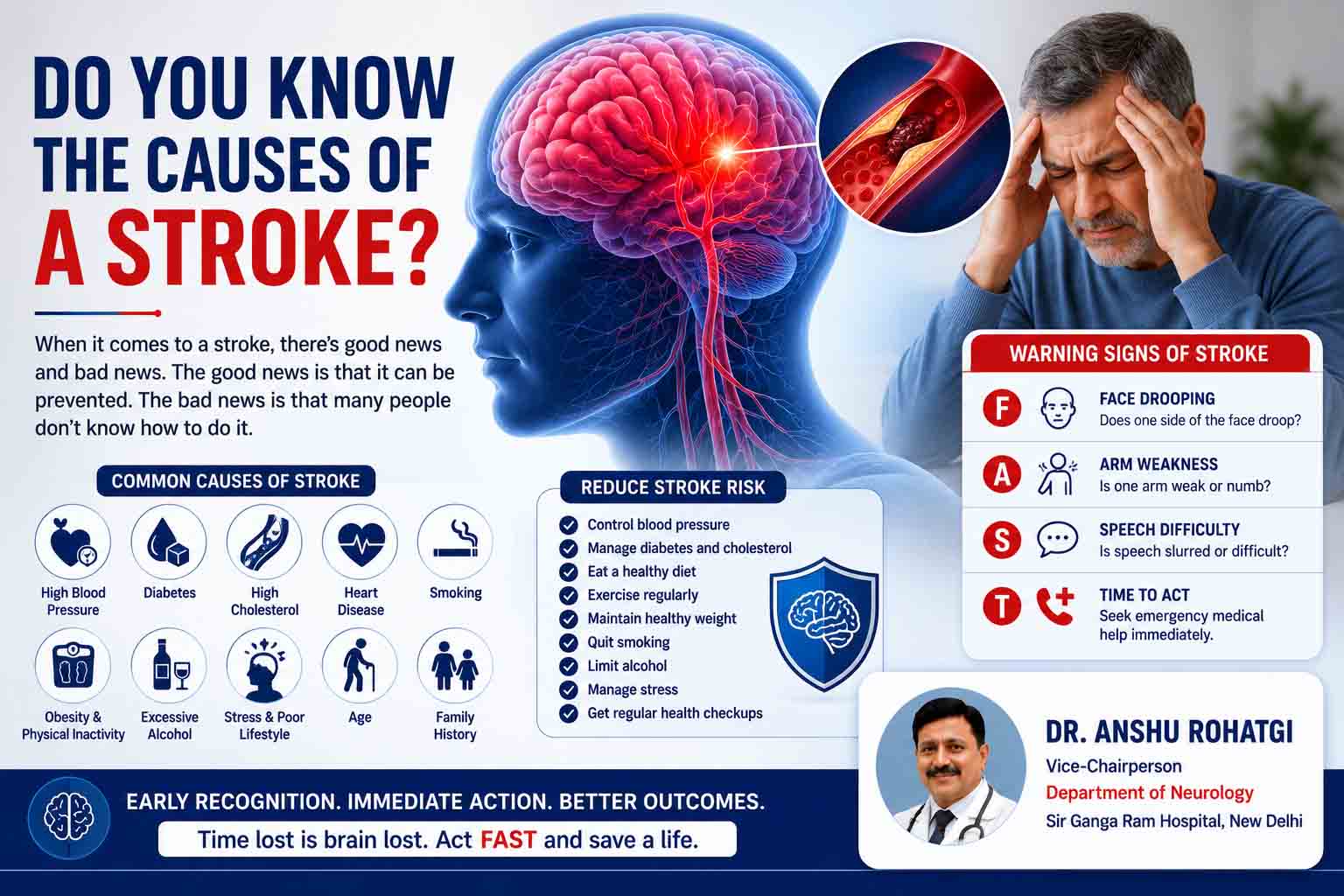
Do You Know the Causes of a Stroke?
When it comes to stroke, there’s both good news and bad news. The good news is that many strokes can be prevented with timely medical care and healthy lifestyle choices. The bad news is that many people still don’t recognize the causes, warning signs, and risk factors until it’s too late.
Stroke is one of the leading causes of disability and death worldwide. However, awareness, early diagnosis, and prevention can significantly reduce the risk and improve outcomes.
What is a Stroke?
A stroke occurs when the blood supply to a part of the brain is interrupted or reduced, preventing brain tissue from receiving oxygen and nutrients. Within minutes, brain cells begin to die.
Stroke is a medical emergency that requires immediate treatment to minimize brain damage and complications.
Types of Stroke
Ischemic Stroke
This is the most common type of stroke and occurs when a blood clot blocks blood flow to the brain.
Hemorrhagic Stroke
This occurs when a blood vessel in the brain bursts, causing bleeding inside the brain.
Transient Ischemic Attack (TIA)
Often called a “mini-stroke,” TIA causes temporary stroke symptoms and serves as a warning sign for future strokes.
Common Causes of Stroke
Several medical conditions and lifestyle factors can increase the risk of stroke.
High Blood Pressure (Hypertension)
High blood pressure is one of the biggest causes of stroke. It damages blood vessels over time and increases the risk of blockage or bleeding in the brain.
Diabetes
Uncontrolled diabetes can damage blood vessels and increase the likelihood of clot formation.
High Cholesterol
Excess cholesterol can build up in arteries, narrowing blood vessels and reducing blood flow to the brain.
Heart Disease
Conditions such as irregular heartbeat (atrial fibrillation), heart valve disease, and heart failure can increase stroke risk.
Smoking
Smoking damages blood vessels, raises blood pressure, and increases clot formation.
Obesity & Physical Inactivity
Lack of exercise and excess body weight contribute to hypertension, diabetes, and heart disease—all major stroke risk factors.
Excessive Alcohol Consumption
Heavy alcohol intake can raise blood pressure and increase the risk of stroke.
Stress & Poor Lifestyle
Chronic stress, unhealthy eating habits, and inadequate sleep can negatively affect cardiovascular and brain health.
Age & Family History
Stroke risk increases with age, but strokes can occur at any age. A family history of stroke may also increase risk.
Warning Signs of Stroke
Recognizing stroke symptoms early can save lives and reduce permanent disability.
Common Stroke Symptoms Include:
- Sudden weakness or numbness in the face, arm, or leg
- Facial drooping
- Difficulty speaking or understanding speech
- Sudden confusion
- Loss of balance or coordination
- Sudden severe headache
- Vision problems
- Dizziness or difficulty walking
Tips to Reduce Stroke Risk:
- Control blood pressure
- Manage diabetes and cholesterol
- Stop smoking
- Exercise regularly
- Maintain healthy body weight
- Eat a balanced diet
- Limit alcohol consumption
- Manage stress
- Get regular health checkups
Early treatment of medical conditions can significantly lower stroke risk.
Why Early Stroke Treatment Matters
Stroke treatment is highly time-sensitive. Immediate medical care can:
- Save brain function
- Reduce long-term disability
- Improve recovery outcomes
- Prevent complications
- Save lives
The first few hours after stroke symptoms begin are critical.
Expert Stroke Care by Dr. Anshu Rohatgi
Dr. Anshu Rohatgi is a highly experienced neurologist in Delhi specializing in stroke diagnosis, prevention, and advanced neurological care. With decades of expertise in managing acute stroke, movement disorders, epilepsy, migraines, and neurological emergencies, he provides comprehensive and patient-focused neurological treatment..
His evidence-based approach focuses on early diagnosis, timely intervention, and long-term neurological wellness.
Conclusion
Stroke is a serious medical emergency, but awareness and prevention can make a huge difference. Understanding the causes of stroke and recognizing warning signs early can help save lives and reduce complications.